
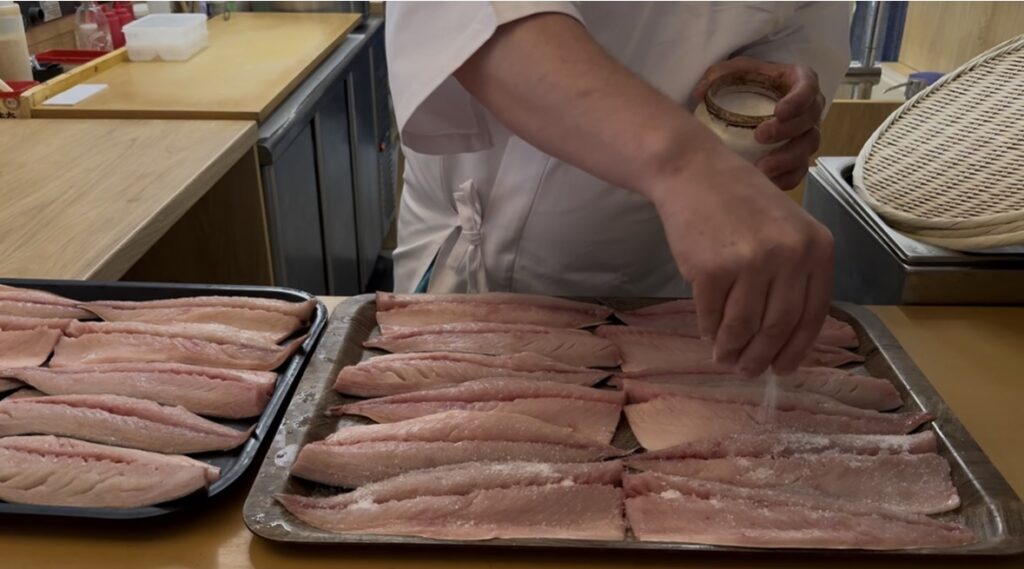
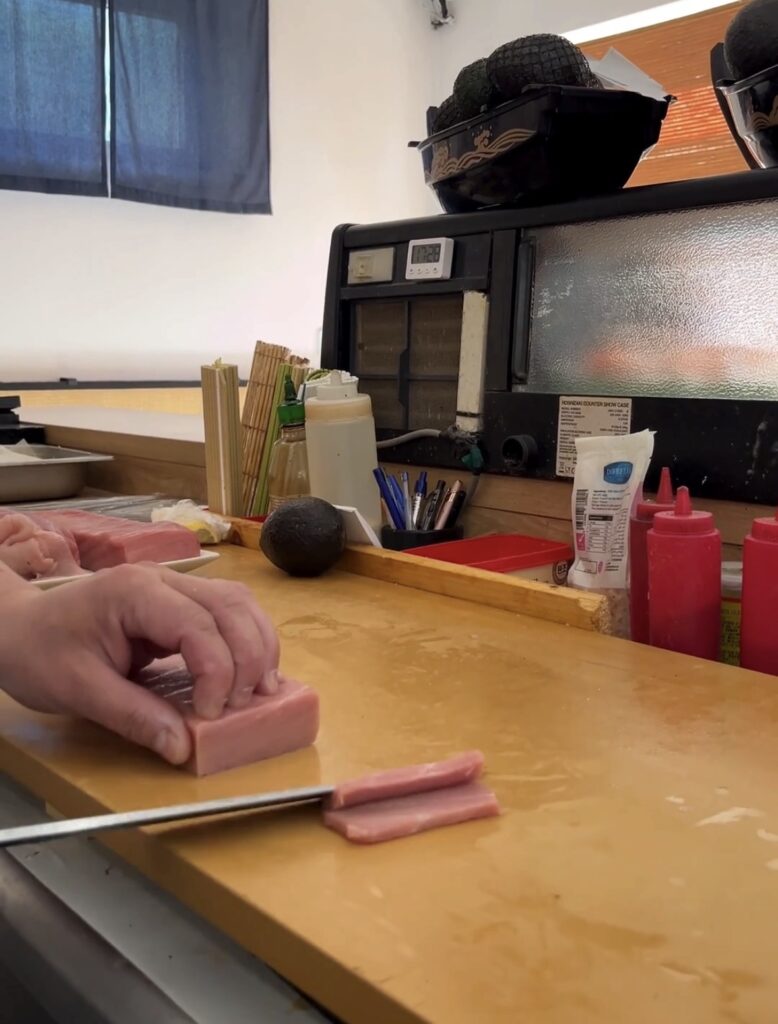

Edomae refers to a style born in the early nineteenth century around Tokyo Bay. Before refrigeration, sushi vendors needed ways to make seafood safe, flavourful, and durable. They salted, cured, marinated, simmered, steamed, and vinegared fish before serving it over seasoned rice. These preparations are called shigoto „work“ which is the heart of the tradition.
An experienced Edomae chef is not assembling ingredients, but editing them. Salt draws out moisture. Vinegar firms flesh and brightens flavour. Soy marinades deepen umami. The goal is to reveal the best version of the fish on that particular day.
The rice matters just as much. In traditional Edomae sushi, the shari is seasoned with vinegar and served at a temperature and acidity that complements the topping. The chef may add nikiri, a concentrated cooked soy sauce, or a small amount of wasabi directly to the nigiri. The diner is not expected to drown the piece in soy sauce because the seasoning has already been considered.
Then comes the form. Hand-pressed nigiri should hold together when lifted, but loosen gently in the mouth. That balance takes years to learn: too little pressure and the rice falls apart; too much pressure and it becomes too dense.
The best Edomae experience is usually counter service and often omakase „I leave it up to you.“ The chef serves pieces in an order to designed to build flavour. Every slice, cure, press, and seasoning is a choice made by someone who understands the ingredient deeply.